


For more than ten years, the fix for a soft pipeline number was always the same: more data. More platforms. More signals. More content. More paid media. More campaigns. More events. And, most recently, more GenAI. Buyer behavior has changed faster than that instinct has, and most marketing teams are now running more tools than ever while producing less certainty about what’s actually working. That’s the world this was built to answer.
DemandScience doesn’t give you another platform to operate. We operate the machinery required to produce the outcome.
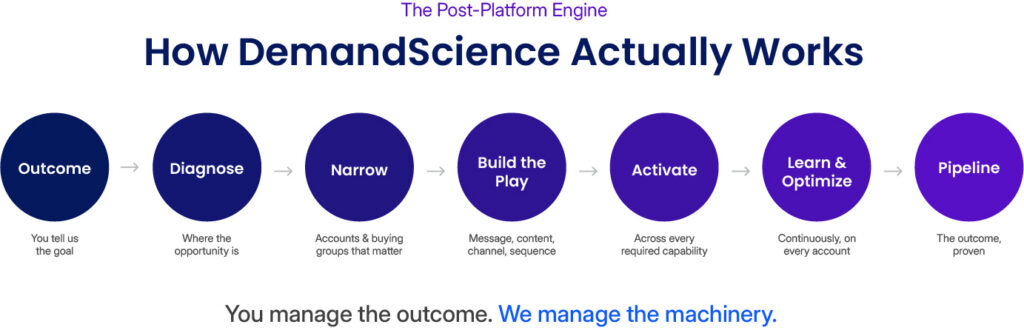
You manage the outcome. We manage the machinery. Here’s exactly what happens at each of those six steps when there’s real budget on the line — the same level of detail I’d want if I were the one being pitched.
One thing worth being precise about before the walkthrough: this isn’t outsourcing your strategy. You set the goal, the messaging, the positioning, and the guardrails. We run the execution underneath it, and you can see it running — not just approve it at the start and hope. Inside DemandScience we have a phrase for this: you see everything, we run everything. Not “you approve everything, then we disappear.” The distinction matters, so I’ve tried to be specific below about which parts are Ionic, which parts have a named person behind them, and which parts stay entirely yours.
Diagnose
Every account decision starts from one dataset: the DS Identity Graph. It’s not a phrase for a slide. It’s a maintained index of 247 million-plus verified contacts, backed by 51 billion-plus behavioral signals, technographic data across 760 million-plus companies, plus hiring activity, funding events, job changes, and intent-topic scoring, all continuously refreshed rather than captured once and left to decay.
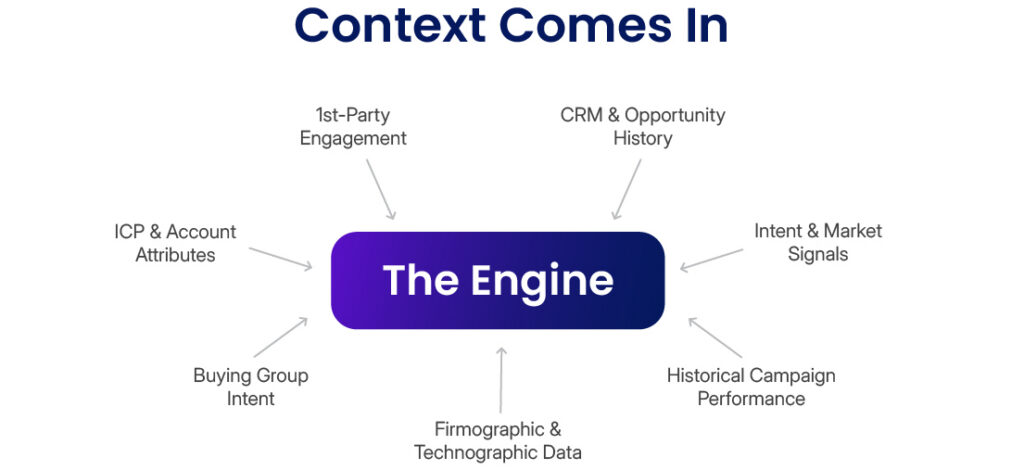
That feeds a scoring model called DS-IQ, which turns raw signal into an actual number: how ready is this account, really. It isn’t a vibe. It’s a score, computed from a specific, maintained dataset — the same way a credit score is a number computed from a specific, maintained dataset, not an opinion. Signals alone are commodities at this point; every vendor sells some version of intent data. What doesn’t commoditize is context: your account history, the relationships your team already has, what’s been tried before and what actually worked. Diagnose is where all of that gets structured into something the rest of the Engine can act on.
A score alone doesn’t move forward on its own. A Labs strategist reviews what Diagnose surfaces before it advances to Narrow — DS-IQ tells you what’s true about an account, but a person still has to judge whether it’s relevant to what you’re actually trying to do this quarter.
Narrow
We don’t fund every account that fits the ICP. On a typical enterprise engagement, Narrow takes a universe of 4,200 possible accounts down to the 125 that show both real propensity to buy and a buying group we can actually reach.
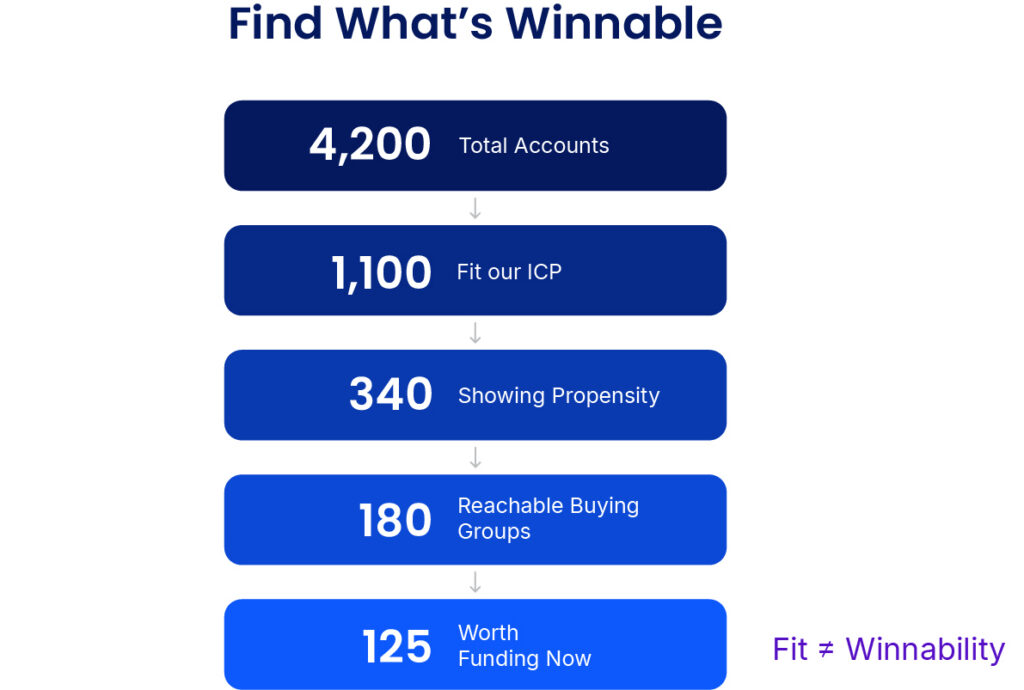
Fit isn’t the same as winnability. An account can match every firmographic filter you own and still be a bad bet this quarter if there’s no real intent behind it and no way to reach the people who’d actually say yes. Screen for both before a dollar of activation spend goes out, and you stop funding accounts that were never in play to begin with.
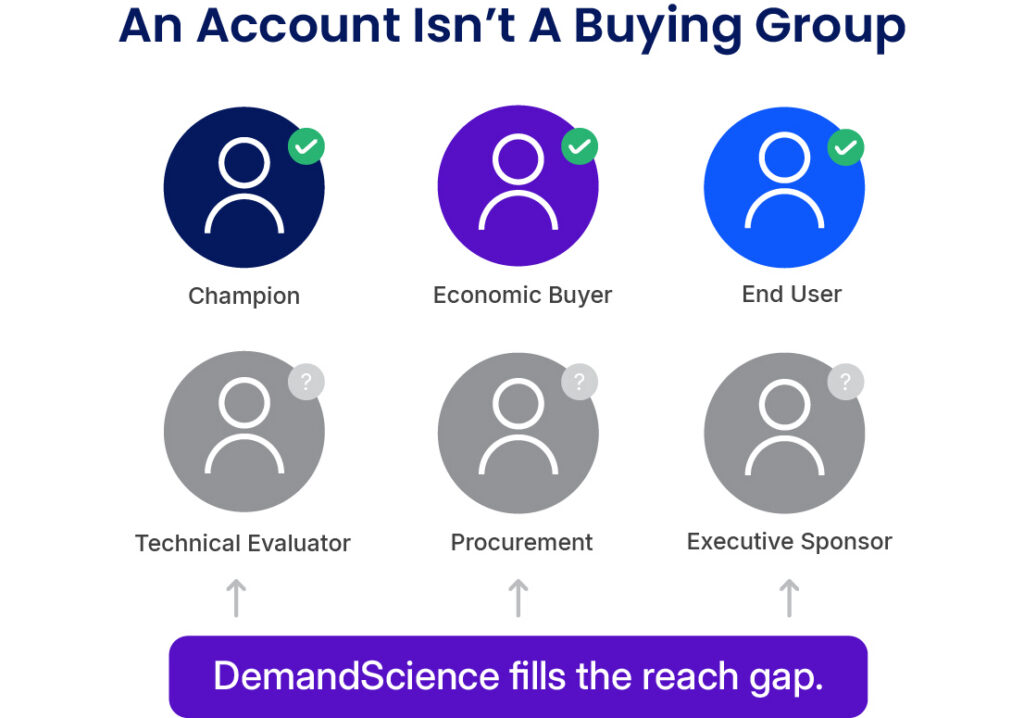
Most B2B purchases are decided by a group, not a person, and most marketing organizations can reliably reach only a fraction of the people inside that group who actually influence the decision. We call that shortfall the Reach Gap, and Narrow treats closing it as a requirement, not an afterthought: champion, economic buyer, technical evaluator, end user, procurement, executive sponsor. Identify who’s missing, and go get them, deliberately.
That shortlist doesn’t move to activation on its own, either. A Labs strategist checks it against your specific priorities for the quarter — the accounts you actually care about winning, not just the ones the model likes — before any budget commits.
Build the Play
Only once the account context and the buying group are both in view does the Engine assemble the actual play: message, content, offer, channel, sequence. To be clear about what “assemble” means here: this runs inside the messaging and positioning you’ve already set, not around it. We’re not writing your value proposition or deciding what your brand says. We’re building the machinery that gets your message in front of the right six people, in the right order, on the right channels.
If a specific play calls for content you don’t have yet, that’s a gap Labs can fill — for an optional fee, built inside your existing messaging and brand guardrails, not instead of them. It’s not a requirement. You’re never on the hook to have every asset ready before the Engine can run; you’re just choosing whether to build it yourself or have us build it to spec.
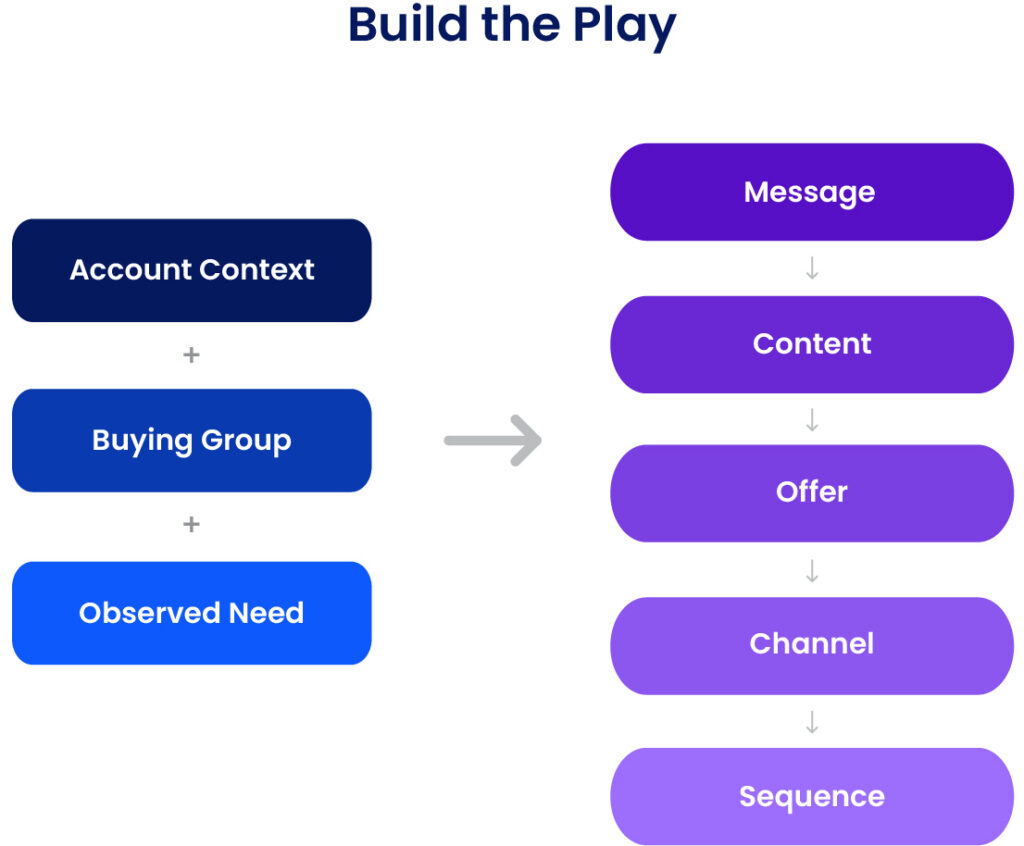
A great message aimed at the wrong three people is just noise with good production value. This is the step that makes sure that doesn’t happen.
Activate
Then it stops and asks you.
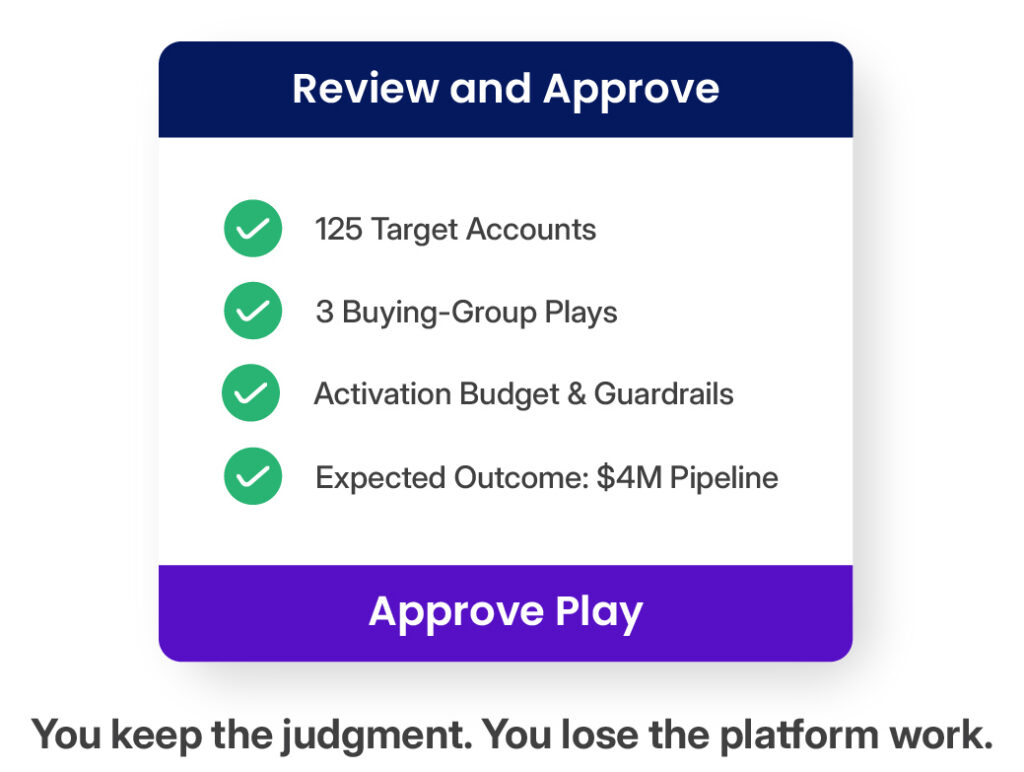
Nothing goes to market without a human saying yes. That’s not a courtesy step — it’s the moment we spent the most time getting right in the design, because it’s the one that matters most psychologically. The Engine doesn’t remove your judgment. It removes the busywork that used to stand between you and using it.
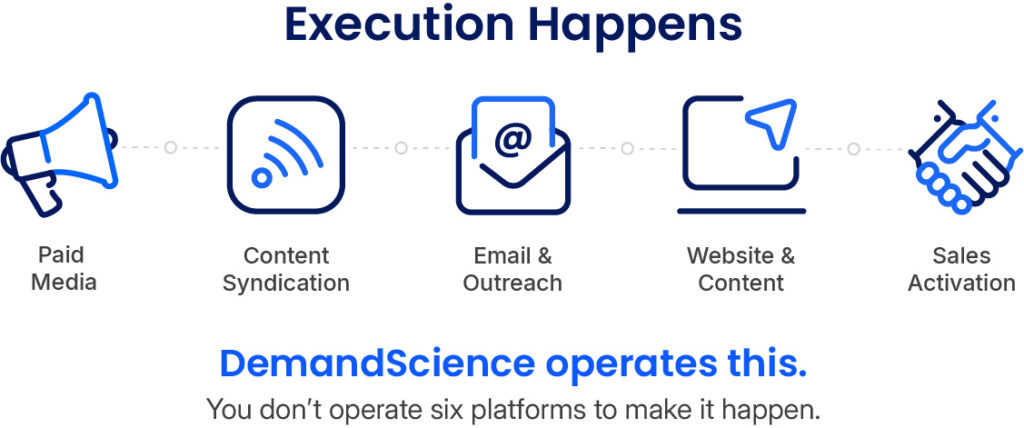
Once you approve, this is what I think of as the Uber moment: you don’t dispatch the driver, track the route, or manage the car yourself. You ask for the outcome, and the system behind it handles the rest. Execution happens across paid media, content syndication, outreach, web experiences, and sales activation — and DemandScience operates it.
“Operates it” doesn’t mean it disappears from view once you approve. Labs — the team of strategists actually running your account — is watching it execute in real time, the same way you can, not filing a report after the fact. This is the “we run everything” half of that phrase I mentioned earlier. The “you see everything” half means the view doesn’t close once you click approve.
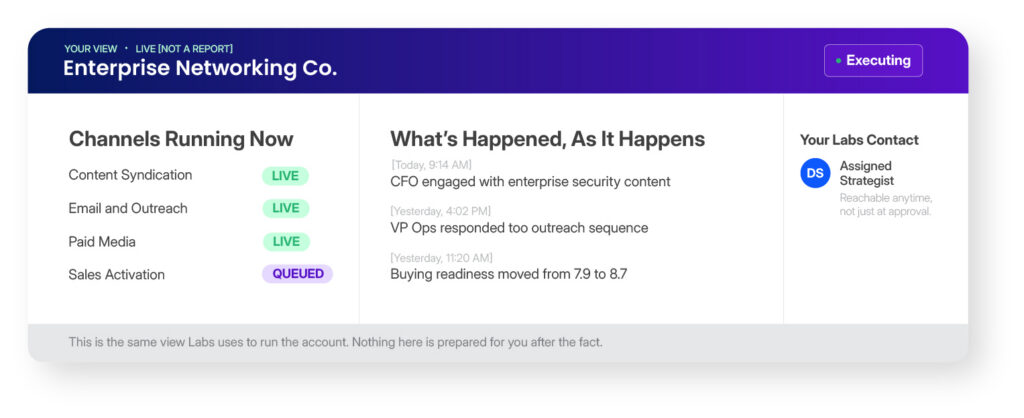
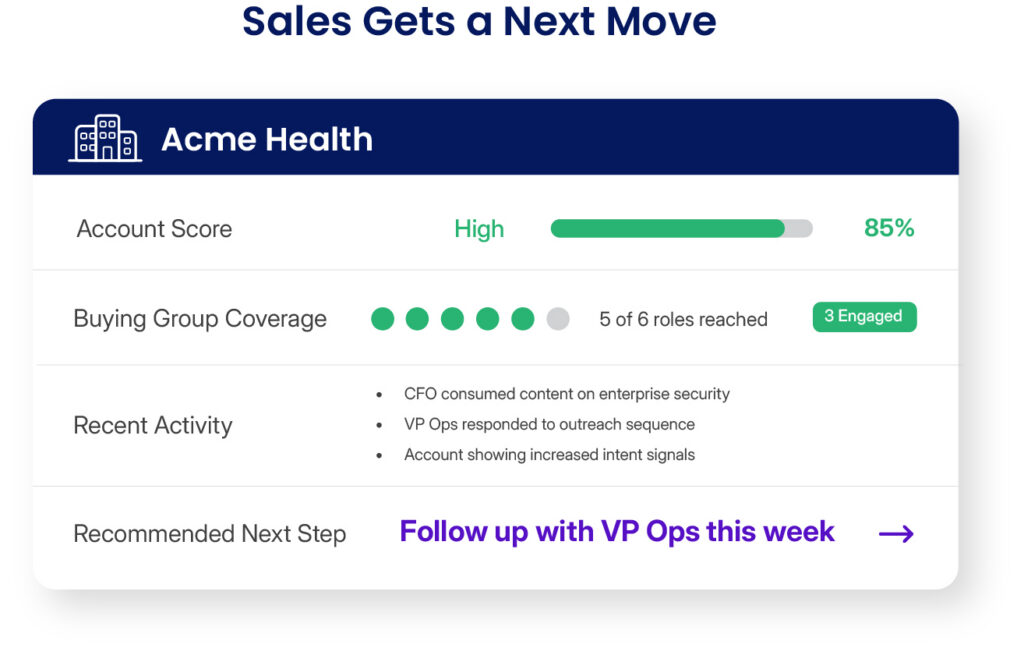
And execution doesn’t end at a campaign report. Sales doesn’t get another dashboard to check. Sales gets an actual account: who’s engaged, what happened, what to do next.
Learn & Optimize
This is the part that runs continuously, not just at the start of a quarter, on every account at once. It has a name — Ionic — and it’s the literal orchestration layer, not a marketing label for “the platform.” Ionic prioritizes accounts by propensity and reachability, decides which channels and plays fit each buying group, orchestrates the execution, optimizes mid-flight based on what’s actually happening, and feeds the outcome back into the model that ranks the next account.
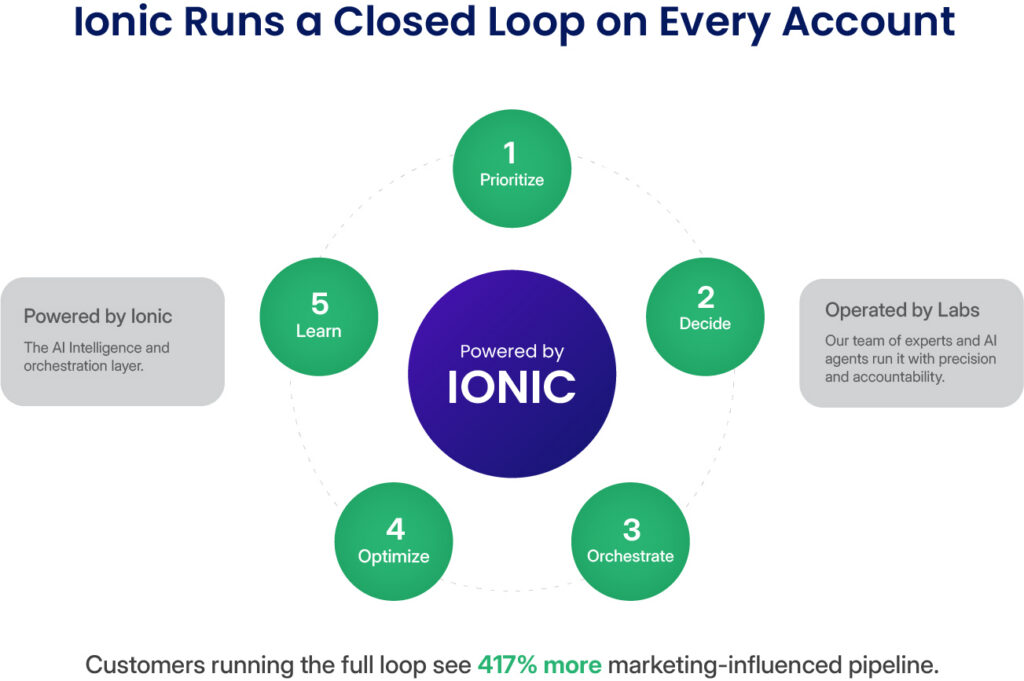
None of that runs unsupervised. Labs — the same team watching execution during Activate — operates Ionic day to day: writing the plays it recommends, reviewing what it flags as an exception, and being the accountable party when something needs a human call instead of an algorithmic one.
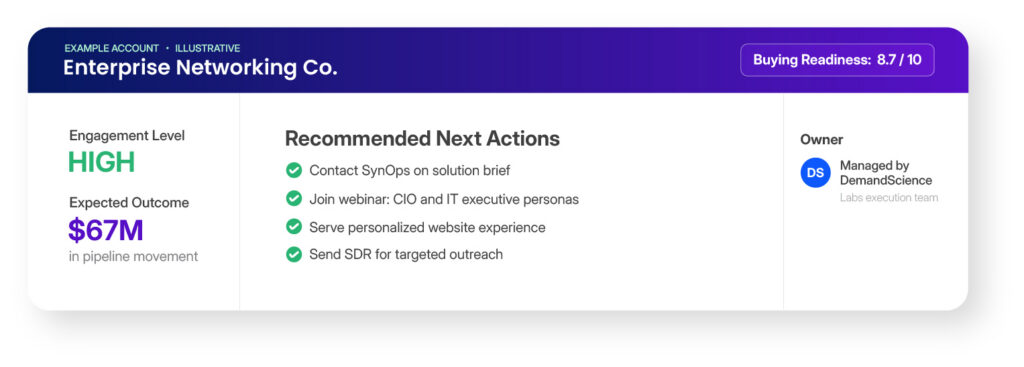
Here’s what that produces on one actual account, stripped down to the fields that matter. The account below is illustrative, not a real customer, but the shape of it — a specific readiness score, specific next actions, a specific owner — is exactly what Ionic generates for every account it prioritizes:
This Is the Post-Platform Engine
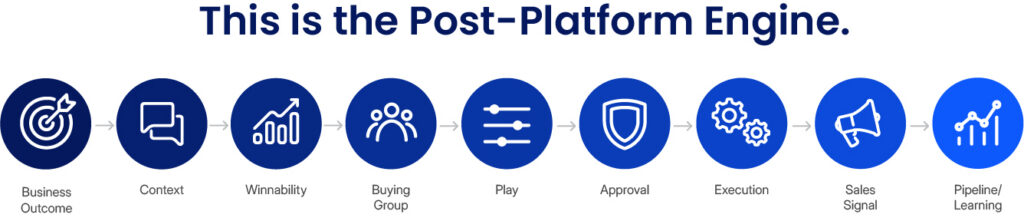
Pull the six steps above apart and each one is a sensible, isolated step. Put them back together and they’re one continuous system, running quietly underneath your quarter instead of eating your Tuesday.
Why I Believe This, Not Just Sell It
We’ve run something close to this sequence with real customers, and the results are why I’m comfortable putting my name on this rather than a generic company byline. In one engagement, cost per qualified account fell from $608 to $117, an 81% reduction, after replacing volume-driven activation with the bounded, outcome-measured approach described above. In another, pipeline increased as much as 417%. These describe specific engagements, not guaranteed averages, and I’d rather be straight about that than oversell it. But they’re the reason I think the operating model matters more than any individual tool in the stack, including ours.
Find Your Stack Leaks
If you want to see where your own stack is leaking budget before you touch any of this, start with your Platform Tax audit. It’s a smaller, more honest first step than replacing anything.
Related Blogs

What is Content Syndication? The Key to Generating Leads and Increasing Conversions
Content syndication is the act of republishing your content to other websites, introducing it to new audiences and…
Read More
Mastering Campaign Measurement: A Guide for B2B Marketers
Measurement is crucial for any marketing or advertising campaign to assess whether your investment paid off. Here are…
Read More
The Hidden Perils of B2B Data Deprecation: A Marketer’s Guide
In B2B marketing, accurate data is essential for success. However, data quality can decline over time due to…
Read More
10 B2B Growth-Hacking Tactics for Lead Generation
Growth hacking is one of the most wide-spread “secrets” of small business start-ups. Its meaning can sometimes get…
Read More
An Inquiry vs. a Lead: What’s the Difference?
Many marketers and sales people assume that inquiries and leads are one and the same, but in fact,…
Read More
10 Examples of Awesome Landing Pages that Convert
To lead more users to your products, you need to create a showstopping landing page. To do this,…
Read More
Lead Quantity vs Lead Quality: Achieving a Balance
Traditional sales and marketing strategies have long focused on lead quantity by casting a wide net to capture…
Read More
What Data Solutions Mean for Marketing Technology?
In recent years, marketing has come to rely on the input of big data in order to create…
Read More
PureBits: Lessons on Life & Sales
Selling is tough. There are many buying signals that a salesperson should watch out for to help them…
Read More
How To Create A Super Engaged Audience For Your Brand
The use of hashtags has become so prominent in content, particularly on social media, that it has penetrated…
Read More
Why Quality Leads are Expensive
Getting more leads at a lower cost is always at the top of lead generation objectives, especially for…
Read More